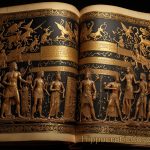
Zeus, the preeminent deity in Greek mythology, stands as a colossal figure embodying power, authority, and justice. Often referred to as the “King of the Gods,” Zeus is venerated as the god of the sky, thunder, and lightning, shaping the ancient Greek worldview and their pantheon of deities. This article will explore Zeus’s origins, attributes, myths, relationships, worship, and his enduring influence on culture and literature.
Origins and Birth
Zeus was born in Crete to Cronus and Rhea, members of the primordial generation of gods known as the Titans. Cronus, fearing that his children would overthrow him, devoured each of his offspring upon their birth. Rhea, desperate to save her youngest child, Zeus, concealed him in a cave on Mount Ida. Instead, she gave Cronus a stone wrapped in swaddling clothes. When Zeus grew to maturity, he returned and persuaded Cronus to regurgitate his siblings: Hestia, Demeter, Hera, Hades, and Poseidon.
With his siblings and allies, notably the Cyclopes and the Hecatoncheires, Zeus participated in the Titanomachy — a ten-year war against the Titans. Ultimately, Zeus emerged victorious, banishing the Titans to Tartarus and establishing himself as the ruler of the cosmos.
Attributes and Symbols
Zeus is often depicted as a regal figure, possessing a robust physique that symbolizes his might. His principal attributes include:
- Thunderbolt: As the god of thunder, Zeus wields a thunderbolt, a powerful weapon that symbolizes his control over storms and weather. The thunderbolt represents divine authority, as it was used to punish wrongdoers.
- Eagle: The eagle, often seen as Zeus’s sacred animal, symbolizes power and authority. It is frequently depicted accompanying him in artistic representations.
- Oak Tree: The oak is considered sacred to Zeus, representing strength and endurance. Sacred groves of oak trees were often sites of worship.
- Aegis: A protective cloak or shield often associated with Zeus, the aegis represents his role as a protector and guardian of the state and its people.
Personality and Role in Myths
Zeus personifies not only authority but also wisdom, fairness, and justice. As the god of law and order, he ensures the proper functioning of cosmic and human affairs. However, he is also known for his impulsive nature and romantic escapades. Many myths recount his numerous affairs with goddesses and mortal women, often leading to conflict or jealousy among the other gods, particularly Hera, his wife and sister.
Major Myths Involving Zeus
- The Trojan War: Zeus played a critical role in the events leading to the Trojan War. He often attempted to maintain a balance between the conflicting parties. Despite his attempts at neutrality, his allegiances shifted through various events, which ultimately influenced the war’s outcome.
- Prometheus and Pandora: In the myth of Prometheus, Zeus punishes the titan for giving fire to humanity. As retribution, he orders the creation of Pandora, the first woman, who opens a box releasing all the evils of the world, leaving only hope inside. This story highlights Zeus’s complex relationship with humanity — nurturing yet vengeful.
- Zeus and his Offspring: Many notable figures in Greek mythology are offspring of Zeus, such as Athena, Apollo, Artemis, Heracles (Hercules), Persephone, and Dionysus. The exploits of his children further reinforce his dominion over gods and humans.
Worship and Cult
Zeus was worshiped widely across ancient Greece, with numerous temples and altars dedicated to him. The most famous of these is the Temple of Zeus at Olympia, site of the ancient Olympic Games, which honored not only the athletic prowess of humans but also the glory of the gods.
Rituals honoring Zeus included sacrifices (often of bulls), libations, and festivals. Olympic Games, established in 776 B.C., were one of the most significant celebrations in his honor and showcased Greek ideals of physical excellence and divine favor.
Influence on Culture and Legacy
The impact of Zeus extends far beyond ancient Greece. His persona inspired countless works of art, literature, and philosophy that transcended time. The Roman equivalent of Zeus is Jupiter, who inherited many of his characteristics and myths.
In modern times, Zeus continues to appear in various forms of media, from literature and films to video games, reflecting the ongoing fascination with his character. His representation often evokes themes of leadership, power, and the complexities of divine and human relationships.
Conclusion
Zeus, as the King of the Gods, is not only a figure of immense power but also a representation of human-like traits, encompassing both benevolence and wrath. His mythology weaves an intricate tapestry of stories that reflect the values, beliefs, and cultural practices of ancient Greek society. The reverence for Zeus reveals the ancient Greeks’ understanding of the cosmos and their need for a powerful protector who could govern both the divine and mortal realms. Today, Zeus’s legacy continues to resonate, underscoring the enduring influence of mythology on contemporary culture.