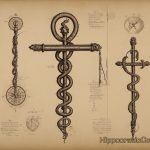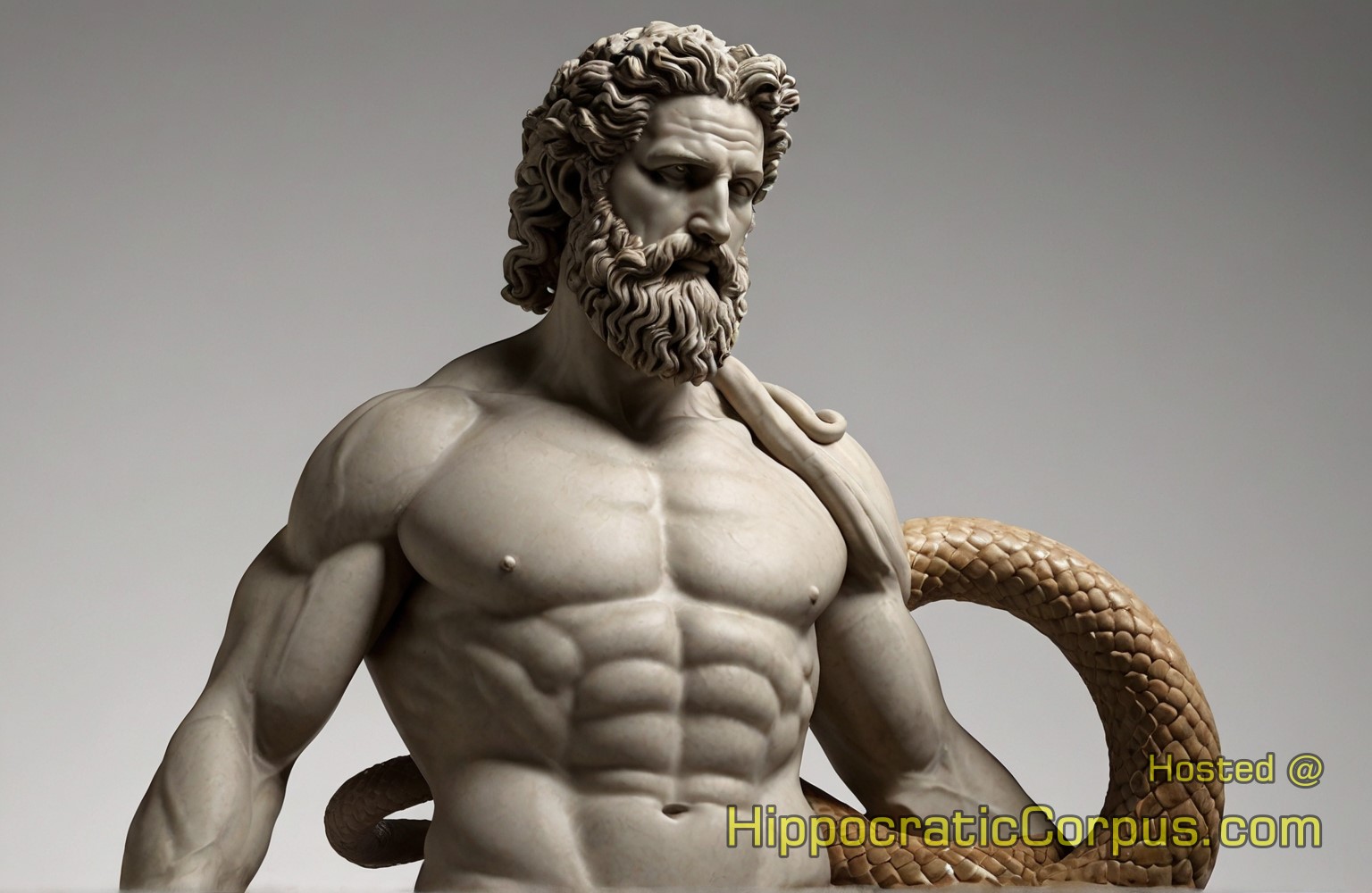
Asclepius, also known as Asclepios, or Asklepios, is a prominent figure in Greek mythology and is revered as the God of Medicine and Healing. He is often depicted as a bearded man holding a staff entwined by a snake, known as the Rod of Asclepius, which has become a universal symbol of medicine.
According to Greek mythology, Asclepius was the son of Apollo, the god of healing, and Coronis, a mortal woman. Raised by the centaur Chiron, Asclepius became a skilled healer and physician, surpassing all others in his ability to cure diseases and restore health.
Asclepios’ healing abilities were so extraordinary that he could even bring the dead back to life. This act of resurrecting the deceased, however, angered the gods, as it disrupted the natural order of life and death. As a result, Zeus, the king of the gods, struck Asclepius with a thunderbolt, killing him.
Despite his demise, Asclepius’ legacy continued to thrive. He was posthumously deified and became a revered figure in ancient Greece. Numerous healing sanctuaries, known as Asclepieia, were established in his honor throughout the Greek world. These sanctuaries served as places of worship and healing, where individuals sought divine intervention and received medical treatments.
The cult of Asclepius involved various rituals and practices. Patients would travel to the Asclepieia and undergo a process called incubation, where they would sleep in the sanctuary and experience dreams believed to be messages from the god. These dreams often provided guidance for diagnosis, treatment, and healing.
Asclepius’ daughters, Hygieia (goddess of cleanliness and hygiene) and Panacea (goddess of universal remedy), were also associated with healing and played significant roles in the cult of Asclepius. Hygieia’s name is the root of the word “hygiene,” emphasizing the importance of cleanliness and preventive measures in maintaining good health.
The symbol of Asclepius, the Rod of Asclepius, has endured as a universal symbol of medicine and healing. It represents the intertwining of knowledge, wisdom, and healing power. The snake, often associated with renewal and regeneration due to its ability to shed its skin, symbolizes the healing process.
Asclepius’ influence extended beyond ancient Greece. His worship and healing practices spread to other parts of the Mediterranean, including Rome, where he was known as Aesculapius. Temples dedicated to Asclepiis were built in various cities, and his cult continued to flourish for centuries.
In conclusion, Asclepius, the Greek god of medicine, holds a significant place in Greek mythology and the history of healing. His exceptional healing abilities, the establishment of healing sanctuaries, and the enduring symbol of the Rod of Asclepius all contribute to his enduring legacy. Asclepius’ influence on medicine and healing continues to be felt, as his symbol remains a powerful emblem in the field of healthcare.