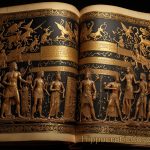
The Hippocratic Corpus is a collection of ancient Greek medical texts attributed to Hippocrates of Kos, who is often regarded as the “Father of Western Medicine.” These writings form the foundation of Western medical thought and practice and provide valuable insights into the medical knowledge and practices of ancient Greece. However, it is essential to note that the authorship of the Hippocratic Corpus is a subject of scholarly debate, and it is unclear whether all the texts were written by a single person, multiple individuals, or were part of a broader medical tradition.
Origins and Background:
- Attribution to Hippocrates: The name “Hippocratic Corpus” is derived from the Greek physician Hippocrates (c. 460–370 BCE), who is considered one of the most prominent figures in ancient medicine. The corpus comprises around 60 to 70 works, ranging from treatises and case histories to practical guidelines on various aspects of medicine.
- Time of Composition: The texts were likely composed over several centuries, spanning from the late 5th century BCE to the 4th century BCE. The exact dates and authors of individual works within the corpus are challenging to ascertain due to the lack of concrete historical evidence.
Content and Themes:
- Medical Philosophy: The Hippocratic Corpus reflects a shift in medical thinking from supernatural explanations of diseases to a more rational and empirical approach. Hippocratic physicians emphasized the observation of symptoms, clinical experience, and the natural causes of illnesses, laying the groundwork for evidence-based medicine.
- Holistic Approach: The corpus promotes a holistic understanding of health, emphasizing the interconnectedness of the body and the importance of maintaining balance (known as “humoral theory“). According to this theory, bodily fluids (humors) – blood, phlegm, black bile, and yellow bile – needed to be in balance for an individual to maintain good health.
- Medical Treatises: The texts cover a wide range of medical topics, including anatomy, physiology, pathology, and therapeutics. Some notable treatises include:
- On the Sacred Disease: Discusses epilepsy, challenging the prevailing belief that it was a divine affliction.
- Airs, Waters, Places: Examines the influence of environment on health and suggests that geographical and climatic factors affect diseases.
- Ethics and Professionalism: The Hippocratic Oath, often associated with the Corpus, outlines ethical guidelines for physicians. It underscores the commitment to patient care, confidentiality, and ethical conduct, reflecting principles that continue to influence medical ethics today.
Legacy and Influence:
- Foundational Texts: The Hippocratic Corpus played a crucial role in shaping the foundations of Western medicine. The emphasis on systematic observation, clinical reasoning, and ethical considerations set a precedent for future medical practices.
- Galenic Tradition: The ideas within the Corpus, especially the humoral theory, continued to be influential throughout the Middle Ages and the Renaissance. The works of Galen of Pergamon, a prominent physician of antiquity, further developed and expanded upon the concepts introduced by the Hippocratic writings.
- Modern Medicine: While many aspects of the Hippocratic Corpus are considered outdated in light of modern medical knowledge, the emphasis on the scientific method, empirical observation, and ethical principles remains relevant. The Hippocratic Oath, in particular, is still recited by graduating medical students today.
Conclusion:
The Hippocratic Corpus stands as a cornerstone of Western medical thought, offering a glimpse into the evolution of medical philosophy and practice in ancient Greece. Its enduring influence has shaped the ethical foundations of medicine and continues to inspire the medical profession to uphold the principles of compassion, professionalism, and evidence-based care. Despite uncertainties about authorship and dating, the legacy of the Hippocratic Corpus endures, serving as a testament to the enduring impact of ancient Greek medical wisdom on the field of medicine.