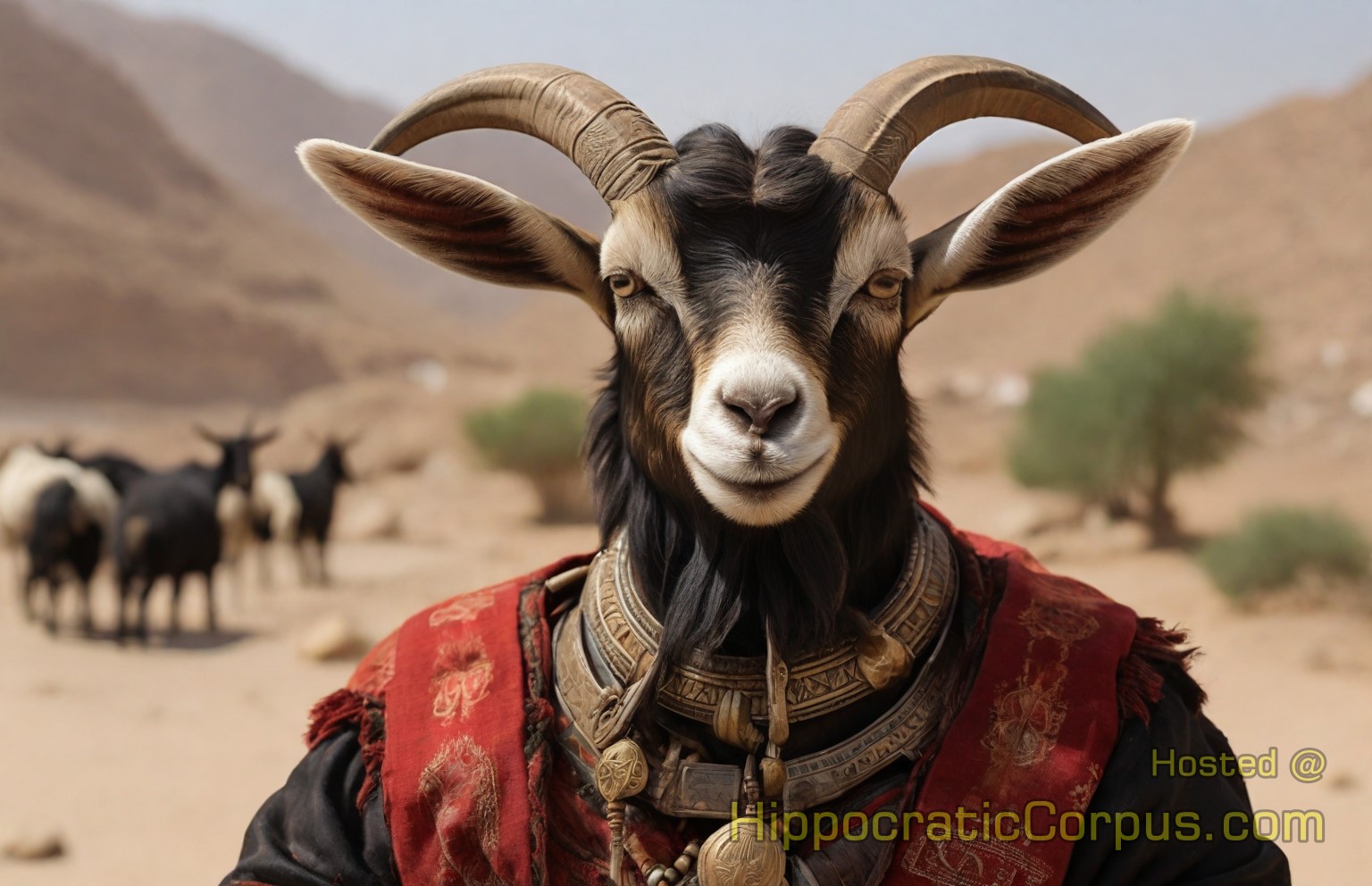
In the rich tapestry of Persian literature and wisdom, the parable of Akhfash’s goat (بز اخفش) stands as a poignant reminder of the complexities of knowledge, understanding, and the pitfalls of pretense. This ancient tale, steeped in allegory, tells of a philosopher who trains his pet goat to nod its head in apparent agreement when asked if it understood a book that was shown to it.
The Story Unfolds: Akhfash’s Unusual Experiment
The tale begins with Akhfash, a learned philosopher renowned for his wisdom and wit. Seeking to test the limits of understanding, Akhfash devises an unusual experiment involving his pet goat. He presents the goat with a book, instructing it to nod its head whenever asked if it comprehended the contents.
Intrigued by the philosopher’s experiment, observers gather to witness the spectacle. As Akhfash reads passages from the book aloud, he pauses to ask the goat if it understands. To the amazement of the onlookers, the goat dutifully nods its head in seeming agreement, earning nods of approval and admiration from the audience.
The Deception Revealed: The Goat’s True Understanding
However, as the experiment unfolds, a subtle revelation begins to emerge. While the goat nods its head in apparent understanding, it becomes evident that its nods are merely a mimicry of the philosopher’s cues. The goat, lacking true comprehension, merely follows the motions it has been trained to perform.
The parable of Akhfash’s goat serves as a cautionary tale against the dangers of pretense and superficial understanding. It illuminates the folly of nodding along with conversations or ideas that one does not truly grasp, whether out of fear of appearing ignorant or a desire to fit in.
The Perils of Pretense: A Reflection on Human Behavior
In its essence, the parable of Akhfash’s goat offers a profound commentary on human behavior and the temptation to feign understanding. It speaks to the tendency to nod along with conversations, concepts, or beliefs simply to avoid confrontation or discomfort.
Just as the goat nods its head in response to the philosopher’s prompts, so too do we sometimes find ourselves nodding along with ideas or opinions that we do not fully comprehend. We may fear appearing ignorant or out of place, leading us to engage in a form of intellectual pretense.
The Quest for True Understanding: A Call to Authenticity
Yet, the parable also offers a path to enlightenment amidst this pretense. By highlighting the folly of the goat’s actions, it invites us to consider the importance of genuine understanding and authentic engagement with knowledge.
Akhfash’s goat becomes a symbol of those who, like the goat, nod along with conversations without truly grasping their meaning. It serves as a reminder that true wisdom comes not from pretense, but from the humility to admit when we do not understand and the curiosity to seek deeper understanding.
Embracing Humility and Curiosity: Lessons from Akhfash’s Goat
As we reflect on the parable of Akhfash’s goat, we are called to cultivate a spirit of humility and curiosity in our pursuit of knowledge. We are reminded that it is far better to admit our lack of understanding and engage in genuine inquiry than to feign comprehension for the sake of appearances.
Moreover, the parable challenges us to be discerning in our interactions and conversations. We are encouraged to listen attentively, ask questions, and seek clarity rather than simply nodding along with the status quo.
Conclusion: Navigating the Path of Understanding
In the end, the parable of Akhfash’s goat invites us to embark on a journey of authentic understanding. It urges us to embrace the humility to admit when we do not know, the courage to ask questions, and the curiosity to delve deeper into the realms of knowledge.
So, let us heed the lessons of Akhfash’s goat, striving to be discerning in our pursuit of understanding and genuine in our engagement with ideas. And may we navigate the path of knowledge with humility and curiosity, nodding not out of pretense, but out of true comprehension and insight.